Wondering if that beautiful tract outside Huntington is really ready for your plans? Acreage can offer space, privacy, and flexibility, but it also comes with details that do not show up in a typical in-town home purchase. If you are thinking about buying land near Huntington, this guide will help you focus on the checks that matter most before you close. Let’s dive in.
Why acreage buying feels different
Buying acreage near Huntington is often less about the view and more about the facts behind the property. You want to know how you will access it, whether utilities are available, how wastewater will be handled, and what tax treatment may apply.
In Angelina County, some of the most important public sources for these questions include the County Clerk, the Road & Bridge Department, Angelina & Neches River Authority, Pineywoods Groundwater Conservation District, the City of Huntington for parcels inside city limits, and the Texas Comptroller and Angelina CAD for appraisal questions. Those checks can help you understand the land before you commit.
Check legal access first
Recorded access matters
A tract can look easy to reach on a map and still raise problems if legal access is unclear. Before closing, you should confirm the deed chain, survey, access documents, and any recorded easements through the Angelina County Clerk, which maintains land records, liens, subdivision plats, and related real property records.
This step matters because access is not just about driving onto the land once. It is about confirming a legally usable route for vehicles, utilities, and future improvements.
Frontage, easements, and future use
If the property is on a public road, you still want to know exactly where the frontage begins and ends. If access depends on an easement, review the recorded terms carefully so you understand who can use it, where it runs, and whether it supports your intended use.
A lower purchase price can lose its appeal quickly if you later need a new access easement or extra work to make the property usable. This is one of the biggest reasons rural due diligence should happen early.
Understand driveway and culvert rules
County right-of-way is not automatic
If your future driveway connects through a county right-of-way, there may be more to it than clearing a path. Angelina County requires a permit for all culvert installations on county right-of-way.
The county’s Road & Bridge process states that it will size, grade, and stake the driveway or culvert area before installation. The county also states that unauthorized driveway or culvert crossings of a county easement or right-of-way can be ordered removed or repaired at the landowner’s expense.
Why this affects your budget
That means a property with roadside access may still require added time, permit coordination, and construction costs. If a tract needs a new entrance, it is smart to treat that as part of your purchase analysis, not an afterthought.
Compare city utilities and rural service
Inside Huntington versus outside town
Parcels inside Huntington may operate under a different set of service and land-use rules than acreage outside city limits. The City of Huntington’s Public Works Department maintains city water, natural gas, and wastewater utilities.
The city’s code library also includes ordinances touching topics such as manufactured homes, RV parks, noise, weeds and trash, and animal and fowl control. If a parcel is inside the city, you should verify which local rules and utility options apply before you move forward.
Rural tracts may need private systems
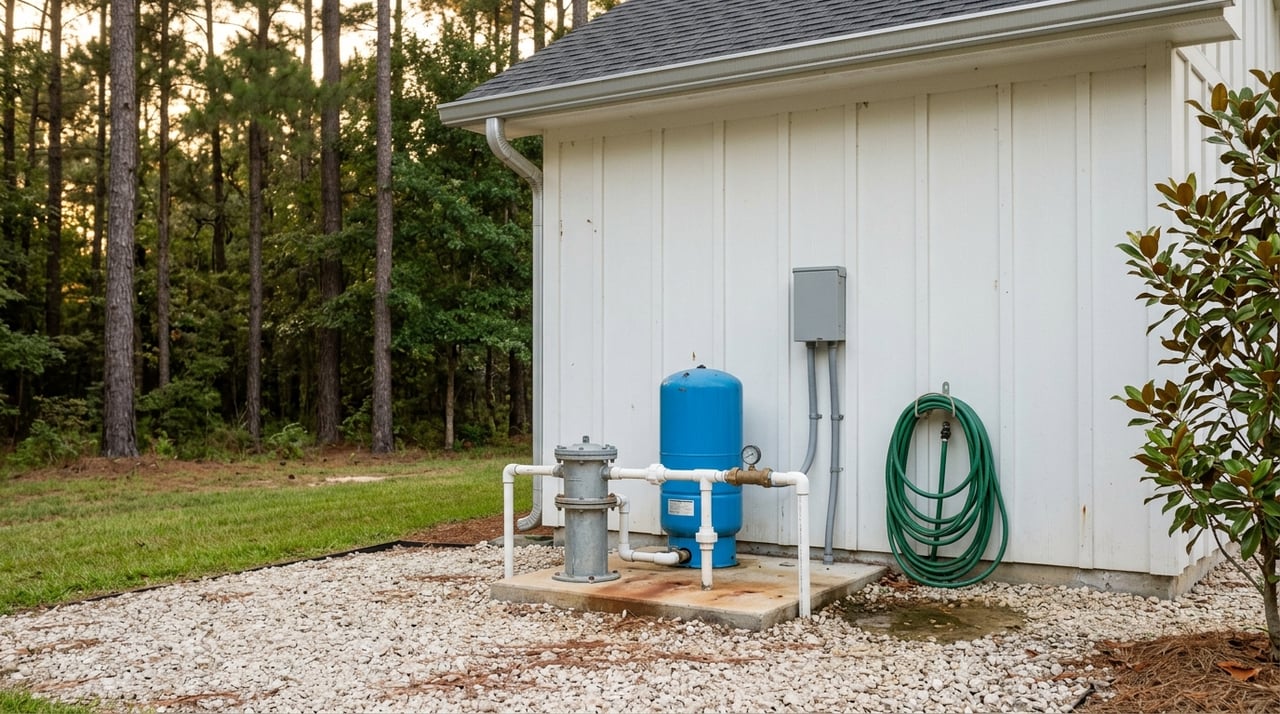
Outside town, acreage often depends on private water and on-site sewage systems rather than city service. That can be perfectly workable, but it also means you need to confirm feasibility, permitting, and placement before closing.
Review septic feasibility early
Septic permits are a major due diligence item
For rural acreage in Angelina County, an on-site sewage facility is common when public sewer is not available. Angelina & Neches River Authority states that it is the TCEQ-authorized agent for OSSF regulation in Angelina County.
TCEQ states that a permit and approved plan are required to construct, alter, repair, extend, and operate an OSSF. TCEQ also notes that local permitting programs can be more stringent than state minimums.
Site evaluation should happen before closing
TCEQ says preconstruction site evaluation includes surveying the lot, conducting a soil analysis in the proposed disposal area, and identifying other criteria needed to determine whether an OSSF is suitable. In plain terms, septic suitability should be part of your offer timeline and inspection period.
If the land does not support the type of system you expected, your building plans and costs can change fast. That is why many acreage buyers treat septic feasibility as a first-round check, not a final step.
The 10-acre exemption is limited
Some buyers assume a 10-acre tract automatically avoids septic permitting, but the rule is narrower than that. TCEQ says an OSSF may be exempt only if the property meets the 10-acre rule and several other conditions.
Those conditions include a site evaluation by a licensed site evaluator or professional engineer, a single-family dwelling on a tract of 10 acres or larger, no nuisance or groundwater pollution, all parts of the system at least 100 feet from the property line, effluent disposed on the property, and only one dwelling on the tract. If any part of that does not fit, the exemption may not apply.
Investigate wells and water quality
Well permits and spacing matter
If the property relies on a private well, check the regulatory side before you assume a well can be drilled where you want it. Pineywoods Groundwater Conservation District states that it issues water well permits and operating permits for exempt and non-exempt wells.
Its forms and materials include a multipurpose well application, a minimum-distance chart, spacing-exception requests, operating-permit renewal requests, and a landowner guide for plugging abandoned water wells. That makes well location, spacing, and prior well history important parts of your review.
Test private well water before you buy
Texas Water Development Board states that private water-well samples can be analyzed by a laboratory. It also states that Texas does not regulate the water quality of private wells and that the owner is responsible for addressing any water-quality problems.
For you as a buyer, that is a strong reason to request recent lab results or arrange testing before closing. Water quality is too important to leave to guesswork.
Ask about ag and timber appraisal
Special appraisal can change carrying costs
For many acreage buyers, taxes are just as important as purchase price. The Texas Comptroller states that qualifying farm, ranch, and timber land may be appraised on productivity value instead of market value, and productivity value is usually lower than market value.
That difference can materially affect your long-term holding costs. If a tract near Huntington is being marketed with agricultural or timber appraisal, you should confirm the current status and understand what supports it.
Ag appraisal is based on use
The Comptroller states that agricultural land must be currently devoted principally to agricultural use at the degree of intensity generally accepted in the area. It also must have been devoted to agricultural or timber production for at least five of the past seven years.
The Comptroller further notes that land inside an incorporated city or town must satisfy additional criteria. So if the property is inside Huntington, do not assume the same rules apply as they would outside town.
Know the rollback tax risk
A change in use can trigger added taxes
If land receiving agricultural appraisal changes to a non-agricultural use, the owner who changes the use owes rollback tax for each of the previous three years in which the land received the lower appraisal, according to the Texas Comptroller. That can be a major cost if your plans involve building, subdividing, or converting the land.
This does not mean you should avoid land with ag appraisal. It means you should understand how your intended use lines up with the current tax treatment before you close.
Look closer at timber tracts
Local timber guidelines add detail
If the acreage includes timber value, local rules matter. Angelina CAD states that timberland qualification requires the land to be used to the degree of intensity generally accepted in Angelina County, devoted principally to timber production for at least five of the last seven years, managed in a typically prudent manner, and devoted to timber production on January 1 of the application year.
Angelina CAD also states that a timber management plan is required for applications under 20 acres and that a tract must have at least 10 total acres to qualify. Those details can make a big difference for smaller tracts.
Timber value is not just acreage
Angelina CAD states that timber productivity values vary by timber prices, timber type, and soil type. It also notes that timber prices are based on a five-year sales average published each year by Texas A&M.
That means you should not assume a tract carries a certain timber value just because it has trees. Current local assumptions matter.
Confirm January 1 appraisal timing
Timing can affect what you inherit
Angelina CAD states that it values property as of January 1 each year. For buyers, that means appraisal status and taxes can be affected by timing, ownership date, and any change in land use after closing.
This is especially important if you are buying late in the year, planning improvements soon after closing, or expecting a special appraisal to continue. It is worth confirming what is in place now and what could change next.
Understand local land-use reality
Zoning is not the whole story
In the Huntington area, practical land use often comes down to recorded restrictions, plats, road rules, utility easements, and service availability. The City of Huntington publishes local codes and utility information, while official county powers guidance notes that most counties do not have zoning authority.
For acreage buyers, that means you should pay close attention to what is recorded and what services are actually available. A zoning-style assumption may tell you very little about how the tract functions in real life.
A simple acreage due diligence checklist
Before you make an offer on acreage near Huntington, try to confirm these items:
- Legal access to the property
- Recorded easements that affect access or utilities
- Survey and any recorded plat
- Driveway or culvert requirements for county right-of-way access
- Septic feasibility and permitting requirements
- Well permit history, spacing, and abandoned well concerns
- Recent private well water test results, if applicable
- Current agricultural or timber appraisal status
- Possible rollback tax exposure if your planned use will change
- Whether the parcel is inside Huntington city limits and subject to city utility or code requirements
Why local guidance matters
Acreage transactions around Huntington can look simple at first and still hide expensive surprises. Access, water, wastewater, and tax treatment can all change the true cost of the property.
That is why local, acreage-focused guidance matters so much. When you work with a team that understands East Texas land, you are in a better position to spot questions early, evaluate a tract clearly, and move forward with confidence.
If you are thinking about buying acreage near Huntington, Kristy Petty can help you evaluate land with the practical, local insight that rural properties require.
FAQs
What should you verify before buying acreage near Huntington?
- You should verify legal access, recorded easements, survey and plat details, septic feasibility, well history, water quality, appraisal status, and whether the property is inside Huntington city limits.
Does acreage near Huntington always have legal road access?
- No. A tract may appear easy to reach, but you should confirm the deed chain, survey, and any recorded access documents or easements through Angelina County land records before closing.
Do you need a permit for a driveway culvert in Angelina County?
- Yes. Angelina County requires a permit for culvert installations on county right-of-way, and unauthorized crossings can be ordered removed or repaired at the landowner’s expense.
Do rural properties near Huntington usually need septic systems?
- Many do when public sewer is not available. In Angelina County, OSSF regulation is handled locally by Angelina & Neches River Authority as the TCEQ-authorized agent.
Does a 10-acre tract near Huntington automatically qualify for a septic exemption?
- No. TCEQ says the exemption applies only if the tract meets the 10-acre rule and several other conditions, including site evaluation, distance requirements, and limits on the number of dwellings.
Should you test private well water before buying acreage in Angelina County?
- Yes. Texas Water Development Board states that private well samples can be tested by a lab and that private well water quality is the owner’s responsibility.
Can ag or timber appraisal lower property taxes on acreage near Huntington?
- Yes. The Texas Comptroller states that qualifying farm, ranch, and timber land may be appraised on productivity value instead of market value, which is usually lower.
What happens if you change the use of land with ag appraisal in Texas?
- A change to non-agricultural use can trigger rollback tax for prior years that received the lower appraisal, so buyers should factor that risk into their plans.
Are land-use rules different inside Huntington city limits?
- Yes. Parcels inside Huntington may be served by city utilities and may also be affected by city ordinances that do not apply the same way outside town.
Why is buying acreage near Huntington different from buying a house in town?
- Rural land often requires extra review of access, utility service, wastewater, water supply, and appraisal status. Those issues can change both the cost and usability of the property after closing.