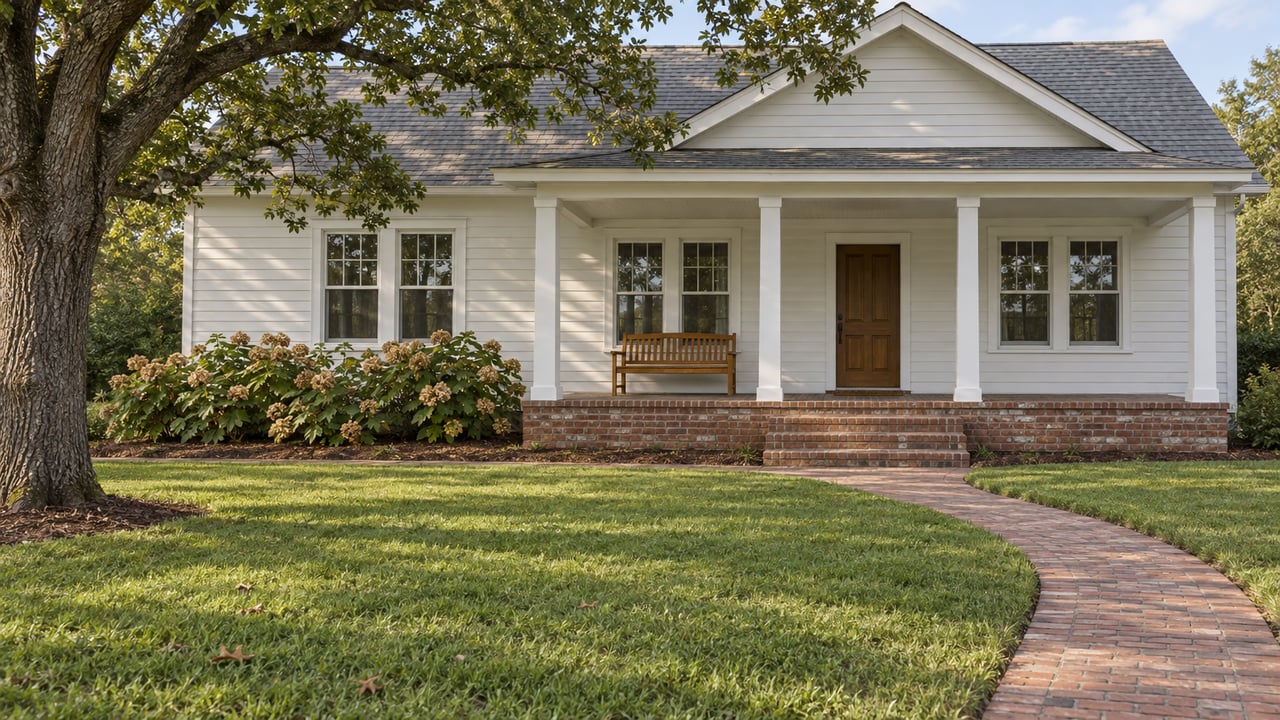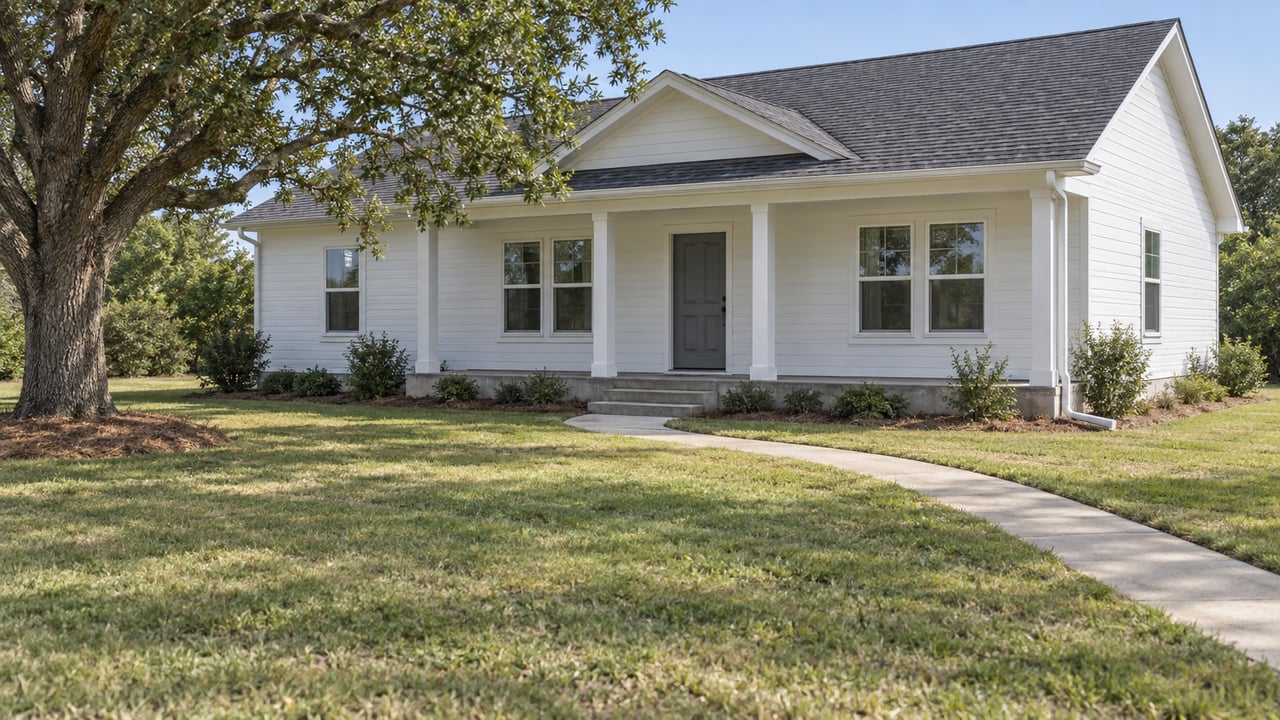
On July 14, 2026, Sam Rayburn Reservoir sat at 72.6% of conservation capacity. Two weeks earlier, samrayburn.com clocked the surface at 156.83 feet, more than seven feet below full pool. If you toured a Cypress Point listing that same week, the shoreline you walked was not the shoreline stamped on the plat. That gap is the whole story of buying a lake home in Huntington.
Buyers coming out of Lufkin, Houston, or the Metroplex tend to read "waterfront" the way they'd read it on a coastal MLS: a deed line, a dock, a boat lift, done. Sam Rayburn does not work that way. The lake is a working flood-control reservoir, and the U.S. Army Corps of Engineers is the party that actually decides, week to week, how much water is behind your house. Once you understand that, the price spread between two seemingly identical Cypress Point lots starts to make sense.
The number the Corps controls, not the seller
Sam Rayburn was built for three jobs, and recreation is the smallest of them. The Fort Worth District describes the mission as flood control for the Angelina and Neches river basins, water supply for Beaumont and the city of Lufkin, and hydropower, with releases held back until flows on the lower Neches drop below 20,000 cubic feet per second. Recreation is what happens in between.
The lake operates against two published elevations that every serious buyer should learn before writing an offer:
| Pool | Elevation | Surface acres |
|---|---|---|
| Conservation pool (normal target) | 164.4 ft | 114,500 |
| Flood control pool (top) | 173.0 ft | 142,700 |
Between those two lines, the Corps considers the lake to be storing floodwater and will release it as soon as the downstream channel allows. Below 164.4, it is in the conservation pool and releases stop unless the water is needed for supply or power. The Corps' own FAQ notes it is not unusual for the lake to exceed 170 feet or to fall to 158 feet or lower during drought, with summer evaporation adding to the drop.
Do the math on the current reading. A lake sitting near 157 feet is roughly seven feet below the elevation the plats were drawn against. On a gently sloped East Texas cove, seven feet of head can push the actual water's edge fifty, one hundred, sometimes several hundred feet back from where the survey ribbons say it should be. Compounding this, the Corps announced in June 2025 a controlled drawdown to complete dam embankment repairs. That is a policy choice, not a weather event, and it shapes what a "waterfront" home looks like right now.
Why Cypress Point sits at the center of this question
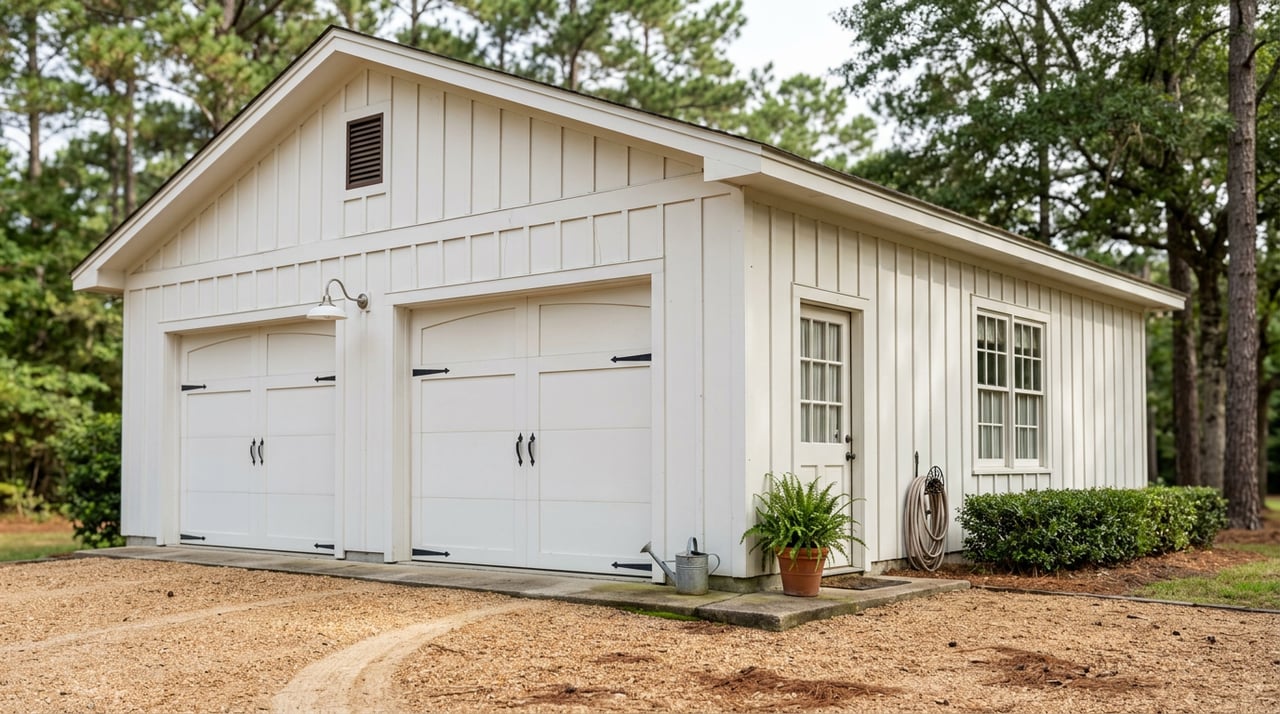
Cypress Point is the gated subdivision on the upper end of the lake between Huntington and Zavalla, tucked off FM 2109 and roughly a half hour from downtown Lufkin. The Lufkin Daily News recently walked through its story: developers purchased the tract from International Paper about sixteen years ago, and long-time Lufkin agent Jeff Buchanan has handled much of the sell-out since. Lots run large and wooded. Homes carry oversized garages because, as Buchanan put it in the paper, people want their boats parked indoors. Builder Mark Hicks' recent 448 Cypress Knoll Road build, a three-bedroom on four acres, is a fair benchmark for the style.
What matters for a buyer is not the amenity story. It is that Cypress Point contains at least three distinct kinds of "waterfront," and the Corps' operating range determines which kind each address actually is on any given weekend.
- Open-water frontage on the main body. Consistent boatable depth in most years, dock potential subject to Corps shoreline permitting, and the widest gap between "high pool view" and "low pool view."
- Cove and cypress-lined shoreline. More shelter, better fishing structure, but shallower drafts. At 157 feet the water can retreat past the cypress knees.
- Creek-connected lots. The Daily News piece describes homes with small creeks running down to the lake. These properties trade the deeded shoreline for a navigable connection that works at conservation pool and disappears in drought.
Two Cypress Knoll addresses can list within twenty thousand dollars of each other and deliver categorically different lake experiences in a low-pool July. The MLS field for "waterfront" will read the same on both.
Transaction friction: what to check before you write an offer
The mechanics above translate into a short list of things that catch out-of-market buyers. None of these are on a portal listing sheet.
- Pull the current elevation the day you tour, and again the day you write. The Corps publishes a live reading on the Sam Rayburn project page. A photograph of the shoreline in April is not evidence of what August looks like.
- Ask which pool the seller's dock, bulkhead, or boathouse was permitted against. Any structure below the 173-foot flood pool line sits on Corps-managed shoreline and requires a shoreline use permit. Permits do not automatically transfer with the deed, and unpermitted structures are the seller's problem to resolve before closing, not the buyer's to inherit.
- Verify boat-ramp access year-round, not just today. Hanks Creek Park, the closest public ramp to Cypress Point, is one of the ramps the Corps monitors for usability during drawdowns. A neighborhood that is "minutes from the ramp" in a normal year can be a trailer trip to a different park in a low year.
- Read the plat against a topographic map. A lot line ending at the 173-foot contour is a very different asset from one ending at 164. The distance between those two contours, walked in person, tells you what the yard becomes when the Corps releases water.
- Confirm Huntington ISD attendance and Angelina County tax roll separately. Cypress Point addresses sit inside Huntington ISD and Angelina County, but the subdivision's rural ZIP and gated entrance sometimes trip up appraisers and lenders unfamiliar with the boundary. Wrong assumptions here surface at underwriting, not before.
- Budget the boat garage the same way you budget the house. Buchanan's observation about oversized garages is a pricing signal. A Cypress Point home without covered indoor boat storage is harder to resell to the next lake buyer, which shows up in eventual days on market.
None of this is a reason to walk away from a Sam Rayburn purchase. It is a reason to price the property against the range the Corps operates in, not against the day you happened to visit.
FAQ
Does a low lake level hurt long-term value at Cypress Point? Not by itself. Sam Rayburn has been fluctuating between roughly 158 and 174 feet across its operating history, and the subdivision has continued to sell out under Jeff Buchanan through both extremes. What hurts value is buying at a high-pool price and being surprised at a low-pool reality. Pricing to the operating range protects you either way.
Can I build my own dock? On paper, yes. In practice, you are seeking a shoreline use permit from the Corps for any structure below the 173-foot flood pool. Plan for that process before you assume a dock is a given.
Is a "creek access" lot the same thing as waterfront? Legally and practically, no. It can be a fine buy at the right price, particularly if you value privacy over open-water views. Just recognize the connection is elevation-dependent and price it accordingly.
How does the 2025 dam repair drawdown affect a 2026 purchase? The repairs are a scheduled Corps project, and the associated drawdown is part of why current elevations are running below full. That does not change the underlying lot, but it does mean listing photos from prior years may over-represent typical shoreline. Ask the listing agent for a current photograph, not archived marketing.
Buying on Sam Rayburn rewards buyers who read the Corps' operating rules the way they'd read a HOA document. If you are weighing a Cypress Point lot, a cove home near Hanks Creek, or an acreage tract with creek access up toward Huntington, Platinum Properties and Ranches can walk the shoreline with you at today's elevation and price the property against the range the lake actually operates in. Get Your Free Property Valuation and let's talk through what your address does, and does not, own down to the water.